Kojic Acid or Kojic Dipalmitate? What Formulators Keep Getting Wrong
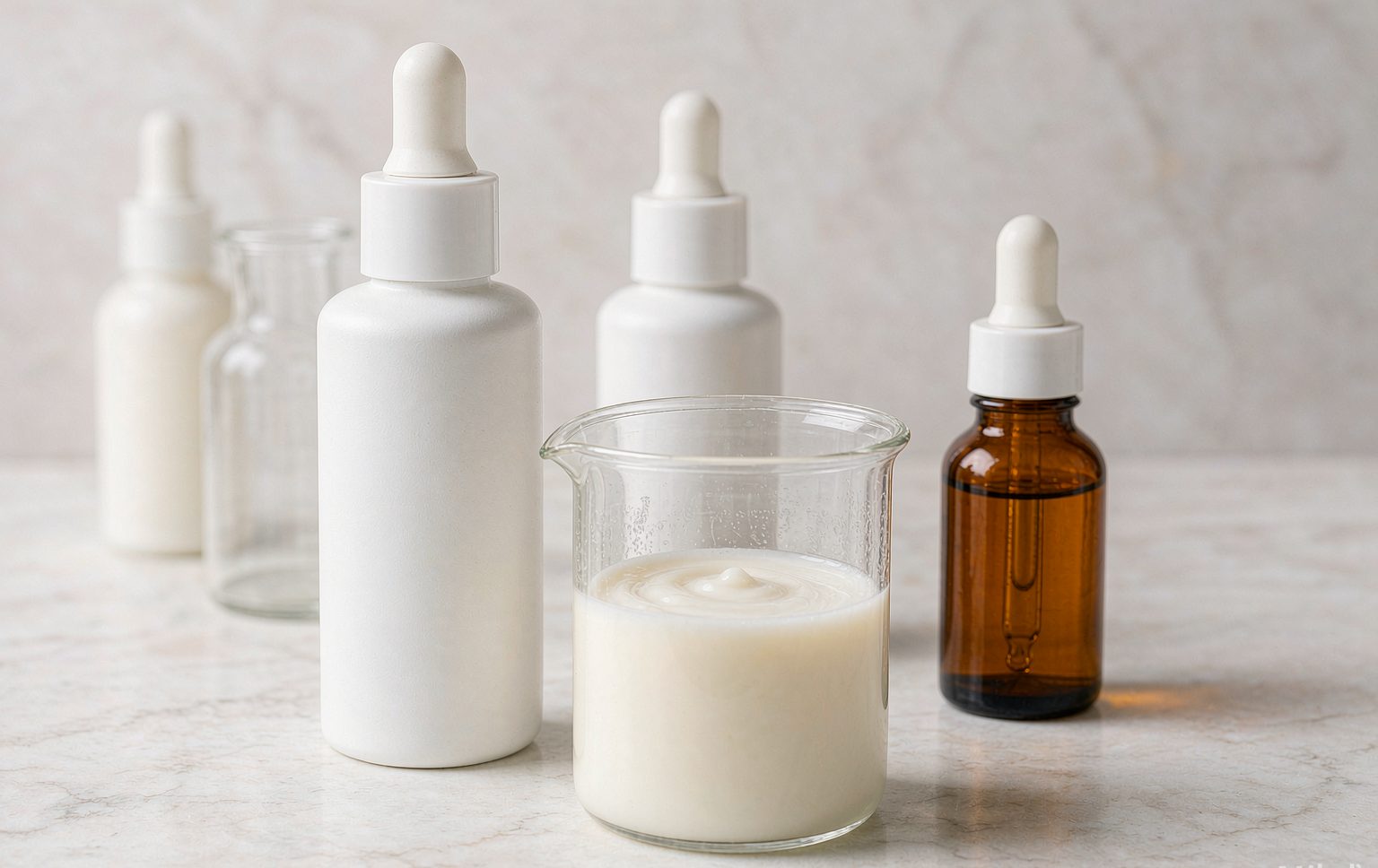
Every few months we get the same urgent email from a skincare brand: their brightening serum turned yellow-brown in the bottle, and they want to know if we sold them bad kojic acid. Almost always, the answer is no. The acid did exactly what kojic acid does when a formulator treats it like a stable ingredient. It isn't one.
Why pure kojic acid is a diva
Kojic acid is a genuinely effective tyrosinase inhibitor - there's solid literature behind it, and consumers increasingly recognize the name, which matters for marketing. But chemically it's sensitive to light, oxygen, and elevated pH. Above roughly pH 7 it degrades fast. Add trace iron from water or equipment and you get chelation-driven discoloration. A serum at pH 5.5 in amber glass with EDTA in the formula can hold it fine. The same actives percentage in a clear PET bottle at pH 6.8 will embarrass everyone within three months.
The fixes are well known: keep pH between 5 and 6, chelate, protect from light, and consider co-pigments. When a brand can't control those variables - or is launching into a hot climate with a long summer warehouse chain - that's when the conversation turns to the dipalmitate ester.
What the dipalmitate actually trades
Kojic dipalmitate is kojic acid with two palmitic chains attached. It's oil-soluble, won't chelate iron, and shrugs off light and heat in conditions that would wreck the free acid. We've seen formulations with it stay water-white for two years.
The honest trade-off: in-vitro tyrosinase inhibition for the ester alone is weaker than pure kojic acid. Formulators who get good results typically pair it with arbutin or niacinamide rather than relying on it solo, and they quote the free-acid equivalent number honestly instead of implying parity. The ester also needs proper emulsification - it won't dissolve into your water phase no matter how long you stir.
How buyers actually decide
After enough of these conversations, the decision usually comes down to three questions, in this order:
- Can your formula hold pH 5-6 with chelation and opaque packaging? If yes, pure kojic acid gives you the strongest documented actives story.
- Is your supply chain hot? Sea freight to the Gulf in July is a stability experiment you didn't plan. The dipalmitate survives it; the acid often doesn't.
- What does your label claim? If marketing wants "Kojic Acid" on the front, note that INCI for the ester is different. Decide this before development, not after.
We supply both grades and we genuinely don't have a favorite - we've watched the ester rescue formulations and watched pure acid outperform in brands that control their process tightly. If you tell us your pH target, packaging, and destination market, we'll tell you which one our other customers in the same situation settled on, and what percentage they used. That conversation is free and usually saves a pilot batch: admin@ly-health.com.